New Technology Change Solar Energy Perovskite Tandem Solar Panels with 30 % Efficiency
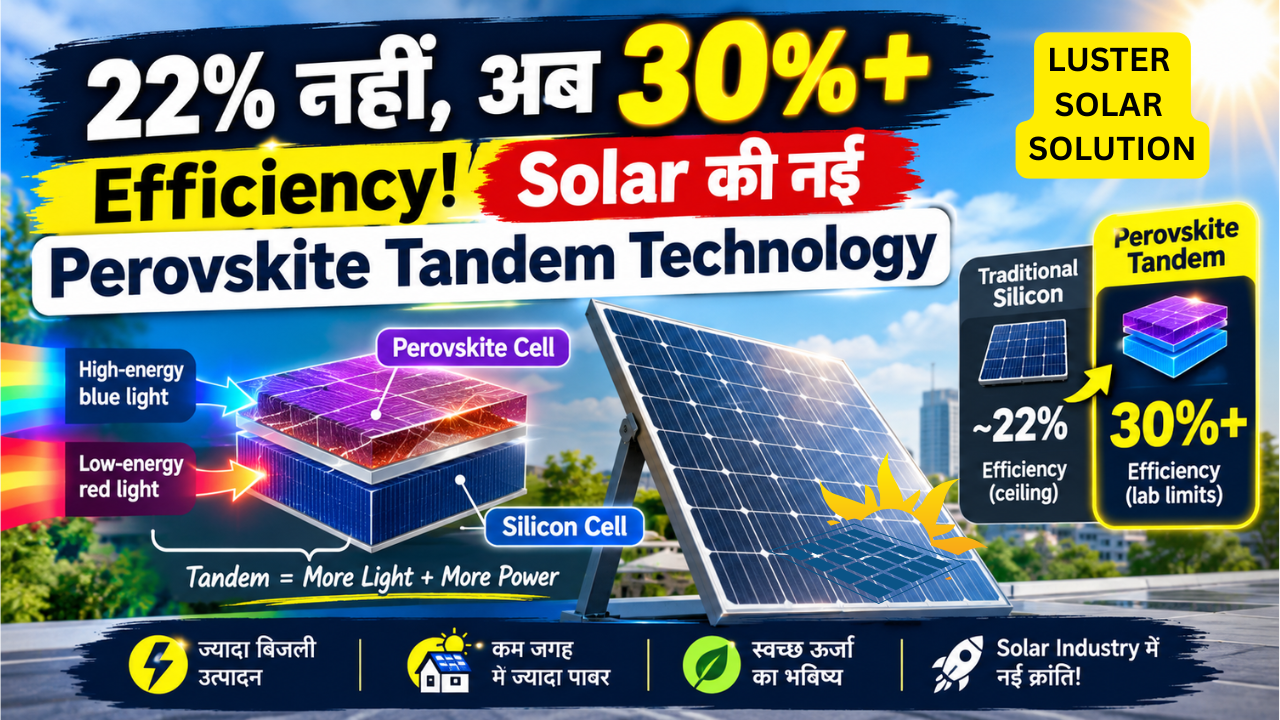
New Technology Change Solar Energy Perovskite Tandem Solar Panels with 30 % Efficiency has already come along way. Modern silicon solar panels can convert sunlight into electricity. Rooftop solar has become very affordable and accessible. But Traditional solar cells are approaching its efficiency limit. Now a days Perovskite tandem solar technology is attracting serious attention. Researchers found that by combining perovskite solar cells with conventional silicon cells there are above 30 % efficiency more. This technology promises more electricity at the same amount of sunlight with same rooftop areas.
What is Perovskite Solar Technology?
Conventional solar panels use crystalline silicon but perovskite cells use engineering light absorbing different part of solar spectrum with efficiency to capture sunlight. This makes interesting when they are combined with silicon and solar cell capture sunlight and cells uses different layers to capture sunlight.
Perovskite Solar Cells
These cells add a perovskite layer on the top of the silicon cells and two materials complement each other. This silicon layer capture different portion of the solar spectrum that passes through. Biggest advantages of perovskite is ability to absorb different parts of solar spectrum very effectively. Two different layers easily captures sunlight. it may reduces of energy losses that occur when sunlight is converted into electricity to a silicon cell.
30 % Efficiency is a B deal
If two panels have same physical size and higher efficiency then sunlight reaching the solar cell to be converted into electrical energy. Rooftop solar space is limited and technology can increase the amount of electricity generated per square meter and silicon solar technology have more efficiency, commercially established and still developing its scale up. Rooftop solar panel have excellent higher power and extensive long term durability. 33 % efficiency research milestone and there are number available for rooftop panel. Sometimes sunlight has more energy than the cell and conventional- junction has physical limits and can covert the broad range of sunlight into electricity. Two semiconductor materials can be deigned to work with different portion of solar spectrum and sunlight converts into Perovskite layer into more effective energy conversion.
Tandem solar cell has 30 percent more efficiency and it will generate 30 percent more electricity and 22 percent more efficient. Actual solar electricity generation depends on many factors like-
- Panels orientation
- Shading of Tress, buildings and window
- System losses
- Inverter efficiency
- Wethaer conditions
- Angle of installatio
- Temperature
- Degradation over time
Why This Technology is important for Rooftop Solar
Roof space has bigger limitation for homes and commercial buildings and homeowners have enough electrical demand for large solar system not for enough usable roof areas. If more power can be generated then a square meter and more space needed for more electricity but double cell is the solution.
There are some important features of this technology are-
- Long Term Stability
- Large scale manufacturing
- Real world performance of the panel under different temperatures like weather conditions and sunlight levels.
- Cost of technology is higher
Conclusion
Perovskite- silicon tandem cells have demonstrated solar conversion with high efficiency and beyond the levels associate with conventional silicon technology. 33 % laboratory cell and commercial rooftop panel are available for homeowners each square meter of panel have more electricity generation.
FAQ
Will Perovskite Tandem Panels Replace silicon solar Panels?
Silicon already has huge global manufacturing system and this Tandem technology takes advantage of existing silicon platform and light absorbing layer.
What could future solar panels look like?
Perovskite – silicon tandem cells, higher efficiency, improved high temperatures, durable materials, Light weight solar modules, smarter power electronics and Building- integrated solar technology.