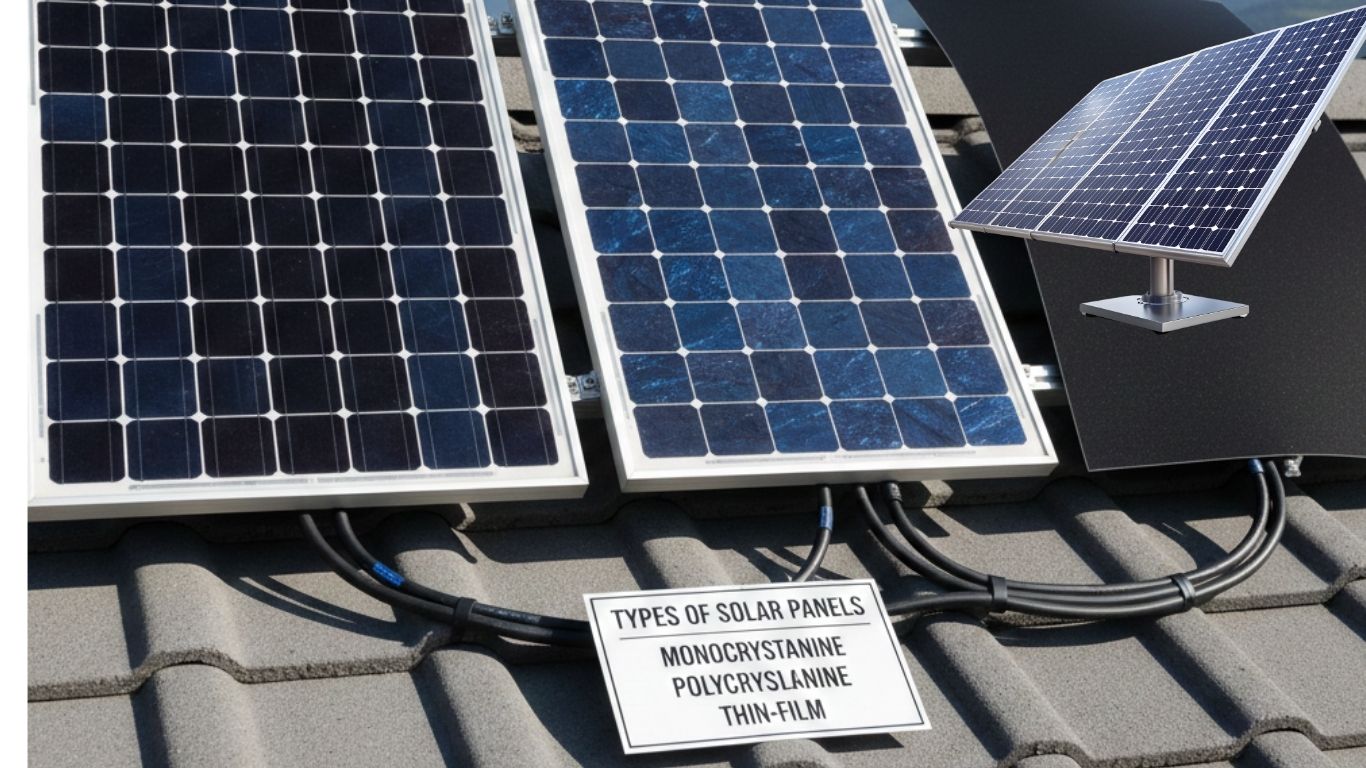
🔆 1. Monocrystalline Solar Panels (Mono Panels)
- Efficiency: 18% – 24%
- Best for: Small roofs, homes, offices, street lights
- Lifetime: 25 – 30 years
Pros: Most efficient, space-saving, performs well in low light and hot temperatures.
Cons: Highest cost per watt.
🔆 2. Polycrystalline Solar Panels (Poly Panels)
- Efficiency: 15% – 18%
- Best for: Large rooftops, budget-conscious projects
- Lifetime: 20 – 25 years
Pros: Lower price than mono. Cons: Needs more space; lower efficiency.
🔆 3. Thin-Film Solar Panels
- Efficiency: 10% – 13%
- Best for: Portable uses, curved surfaces, large-area installations where weight matters
- Lifetime: 10 – 15 years
Pros: Cheapest and flexible. Cons: Lower efficiency and shorter lifespan; needs more area.
🔆 4. PERC Solar Panels (Passivated Emitter Rear Cell)
- Efficiency: 20% – 25%
- Best for: Residential and commercial users seeking extra output
- Lifetime: ~25 years
Pros: Higher output, better low-light performance. Cons: Slightly costlier than standard panels.
🔆 5. Bifacial Solar Panels
- Production boost: +10% to +30% (site dependent)
- Best for: Ground-mounted systems, solar parks, carports
- Lifetime: ~30 years (glass-glass variants)
Pros: Higher yield and longevity. Cons: Higher cost; needs reflective/optimized mounting.
Comparison — Which panel is best?
| Type | Efficiency | Cost | Space Required | Lifespan |
|---|---|---|---|---|
| Monocrystalline | High (18–24%) | Expensive | Very Low | 25–30 yrs |
| Polycrystalline | Medium (15–18%) | Affordable | Medium | 20–25 yrs |
| Thin-Film | Low (10–13%) | Cheapest | Large | 10–15 yrs |
| PERC | Very High (20–25%) | Medium–High | Low | ~25 yrs |
| Bifacial | Highest (site dependent) | Expensive | Medium–Large | ~30 yrs |
Which solar panel should you choose?
Deciding factors are budget, available space, and energy needs. Use the quick recommendations below:
| Roof Type | Recommended Panel |
|---|---|
| Small roof | Monocrystalline / PERC |
| Large roof | Polycrystalline |
| Ground solar plant | Bifacial / Thin-Film |
| Low budget | Polycrystalline / Thin-Film |
| Premium performance | Monocrystalline / PERC |
📝 Conclusion
Choosing the right solar panel depends on your budget, space, and energy goals. If performance and long life are top priorities, prefer Monocrystalline or PERC. For tighter budgets with ample space, Polycrystalline is an excellent choice. For large ground-mounted or specialized installations, consider Bifacial or Thin-Film. Solar is an investment that reduces electricity bills and supports a cleaner planet.
❓ Frequently Asked Questions (FAQs)
1. Which solar panel is best for homes?
Monocrystalline or PERC panels are usually best for homes due to their higher efficiency and longer service life.
2. Which solar panel is the cheapest?
Thin-film panels are typically the cheapest per panel, though they need more area and may have shorter lifetimes. Polycrystalline is often the most cost-effective for rooftop installations.
3. Can solar panels work on cloudy days?
Yes. Solar panels continue to generate electricity on cloudy days, though output is reduced. Monocrystalline and PERC panels perform relatively better in low-light conditions.
4. What is the lifespan of solar panels?
Many modern panels come with performance warranties of 25 years or more; typical lifespans range from 20 to 30+ years depending on technology and build quality.
5. How many panels do I need for a 3kW system?
It depends on the wattage of each panel. For example, using 400–550W panels, you’d typically need about 6–8 panels to reach ~3kW.