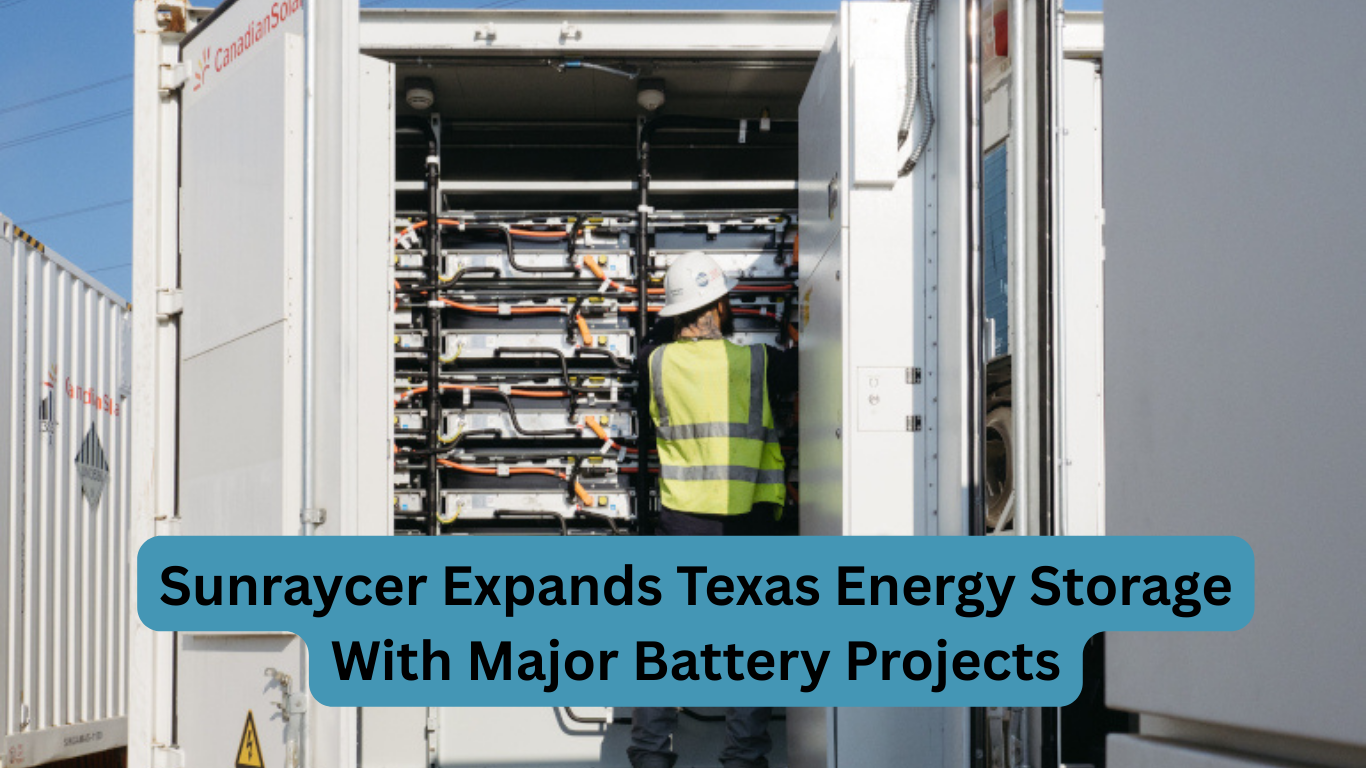
Sunraycer Expands Texas Energy Storage With Major Battery Projects
Texas continues to strengthen its clean energy backbone, and a new large-scale battery storage initiative is set to play a key role in that progress. Clean energy developer Sunraycer has announced plans to develop two standalone battery energy storage systems (BESS) in Franklin County, Texas, with a combined capacity of 503 megawatt-hours (MWh). These projects are expected to significantly improve grid stability while supporting the state’s growing reliance on renewable power.
A Closer Look at the Lupinus Projects
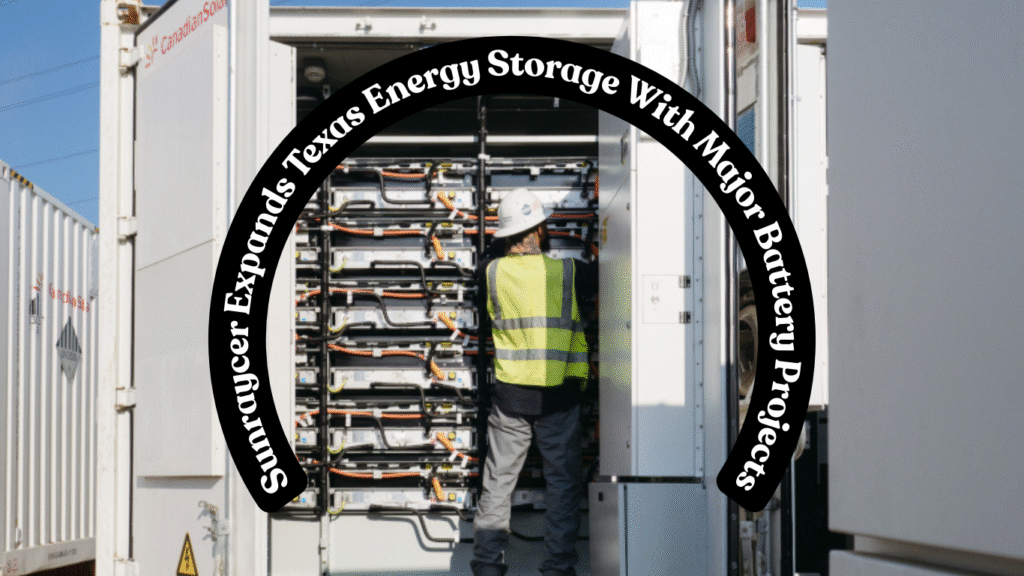
The two battery facilities are collectively named the Lupinus projects and will be supplied and serviced by e-STORAGE, the energy storage division of Canadian Solar. Rather than being connected directly to a solar or wind plant, these are standalone battery systems, meaning they are dedicated entirely to storing and dispatching electricity when the grid needs it most.
The projects are divided into two phases:
- Lupinus 1 will have a storage capacity of 202 MWh. Construction is scheduled to begin in the first quarter of 2027, with commercial operations expected by Q3 2027.
- Lupinus 2 will be the larger of the two, with 301 MWh of storage. Construction will start earlier, in Q3 2026, and the project is expected to go live by Q2 2027.
Together, these installations will provide enough stored energy to power tens of thousands of homes for several hours during peak demand periods.
Why Battery Storage Matters for Texas
Texas operates its own independent power grid through ERCOT (Electric Reliability Council of Texas). While this independence allows flexibility and innovation, it also means the grid must handle extreme weather events, sudden demand spikes, and the variable nature of renewable energy sources.
Battery energy storage systems help solve these challenges by:
- Storing excess electricity when supply is high
- Releasing power during peak demand or grid stress
- Improving reliability during outages or weather-related disruptions
- Supporting the integration of wind and solar energy
The Lupinus projects will play an important role in strengthening ERCOT’s resilience, especially as Texas continues to add more renewable generation capacity.
Technology Behind the Projects
e-STORAGE will supply its SolBank 3.0 battery energy storage solution for both facilities. This system is designed for utility-scale applications and focuses on long-term performance, safety, and efficiency.
In addition to equipment delivery, e-STORAGE will also provide 10 years of long-term service and support, including:
- System performance monitoring
- Preventive and corrective maintenance
- Optimization of battery availability and efficiency
- Ongoing operational support throughout the project lifecycle
This long-term service agreement ensures that the battery systems remain reliable and cost-effective well into the future.
Industry Leaders Speak on the Partnership
Sunraycer CEO David Lillefloren highlighted the strategic importance of the collaboration, noting that the projects align closely with the company’s goal of expanding sustainable energy infrastructure. He emphasized that battery storage is no longer optional—it is essential for maintaining grid reliability and enabling a successful transition to clean energy.
From e-STORAGE’s side, Colin Parkin, President of Canadian Solar and e-STORAGE, expressed enthusiasm about continuing the partnership with Sunraycer. He pointed out that the Lupinus projects demonstrate how advanced battery technology, combined with strong service capabilities, can deliver lasting value for utilities and grid operators across Texas.
Supporting the Clean Energy Transition
As renewable energy adoption grows, energy storage is becoming just as important as generation itself. Solar and wind power depend on weather conditions, but batteries ensure that clean energy is available when people actually need it.
The Lupinus projects reflect a broader shift in the energy industry—moving beyond power production alone and focusing on flexibility, reliability, and grid intelligence. By investing in large-scale storage, Sunraycer is helping Texas prepare for a future where clean energy plays a central role without compromising system stability.
Looking Ahead
Once operational, the Lupinus battery projects will stand as a major contribution to Texas’s clean energy infrastructure. They will help stabilize the grid, reduce congestion during peak hours, and support the state’s ongoing energy transformation.
With construction scheduled over the next few years, these projects mark another important milestone in the rapid expansion of utility-scale energy storage across the United States—especially in energy-intensive states like Texas.
Frequently Asked Questions (FAQ)
1. What are the Lupinus energy storage projects?
The Lupinus projects are two standalone battery energy storage systems being developed by Sunraycer in Franklin County, Texas. Together, they will provide 503 MWh of energy storage to support grid reliability and renewable energy integration.
2. Why are standalone battery energy storage systems important?
Standalone battery systems store electricity independently from power plants. This allows them to release energy during peak demand, stabilize the grid, reduce outages, and improve the use of renewable energy such as solar and wind.
3. When will the Lupinus projects become operational?
Lupinus 2 is expected to begin operations in the second quarter of 2027, while Lupinus 1 is scheduled to go live in the third quarter of 2027.
4. What technology will be used in these projects?
Both facilities will use the SolBank 3.0 battery energy storage system supplied by e-STORAGE, a division of Canadian Solar. The technology is designed for large-scale, long-term energy storage applications.
5. How will these projects benefit the Texas power grid?
The projects will strengthen the ERCOT grid by improving energy reliability, managing peak demand, supporting renewable power integration, and enhancing overall grid resilience during extreme weather events.
6. Who is providing long-term support for the battery systems?
e-STORAGE will provide equipment supply along with 10 years of long-term services, including system maintenance, performance optimization, and operational support.